



How Does Laser Cleaning Machine Work?
Laser cleaning technology has become a transformative solution across modern manufacturing, restoration, and surface treatment industries. We recognize laser cleaning machines as advanced systems that utilize high-energy laser beams to remove contaminants from material surfaces with extreme precision. Unlike traditional abrasive or chemical cleaning methods, laser cleaning operates without physical contact, consumables, or secondary waste. This positions it as a highly efficient, environmentally responsible, and industrially scalable solution.
Laser cleaning machines are engineered to remove rust, paint, oil, oxides, coatings, and other unwanted layers without damaging the underlying substrate. The process is fast, controllable, repeatable, and suitable for metals, composites, stone, and even delicate historical artifacts.
Core Working Principle of a Laser Cleaning Machine
The fundamental working principle of a laser cleaning machine is based on laser ablation and photothermal interaction. When a high-intensity laser beam is directed at a contaminated surface, the contaminant layer absorbs the laser energy at a different rate than the base material. This selective absorption causes the unwanted layer to rapidly heat, expand, and vaporize or detach from the surface.
The substrate remains intact because the laser parameters—such as wavelength, pulse duration, frequency, and energy density—are precisely tuned to target only the contaminant layer. This differential response is what allows laser cleaning to be both powerful and non-destructive.
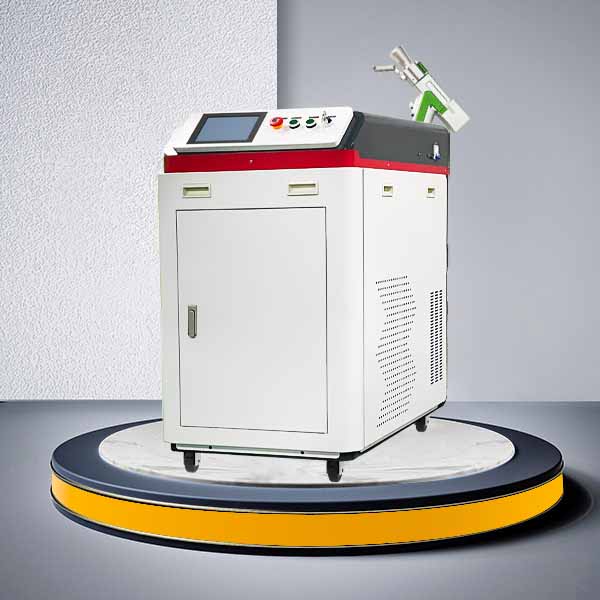
Key Components of a Laser Cleaning System
Laser Source
The laser source is the heart of the machine. Fiber lasers are most commonly used due to their high beam quality, long service life, and energy efficiency. Typical power ranges vary from 50W to over 2000W, depending on application requirements.
Beam Delivery System
The laser beam is guided through optical fibers and focused using specialized lenses. This system ensures consistent energy distribution and accurate targeting across the cleaning area.
Scanning Head
The scanning head controls beam movement and cleaning patterns. Galvanometer scanners enable rapid beam oscillation, ensuring uniform cleaning even on complex geometries.
Control Unit
The control system allows operators to adjust cleaning parameters such as pulse width, frequency, speed, and power. Advanced systems support programmable recipes for different materials and contamination types.
Safety Enclosure and Extraction
Laser cleaning machines incorporate safety housings, interlocks, and fume extraction systems to ensure operator protection and compliance with industrial safety standards.
Laser Cleaning Process Step by Step
Surface Assessment
We begin by identifying the substrate material and contamination type. This step determines the optimal laser parameters and cleaning strategy.
Parameter Configuration
Laser wavelength, pulse duration, repetition rate, and scanning speed are configured to match the absorption characteristics of the contaminant.
Laser Interaction
The laser beam irradiates the surface. Contaminants absorb energy, break molecular bonds, and are ejected as vapor or fine particles.
Residue Removal
A vacuum or filtration system captures the detached particles, leaving a clean, residue-free surface.
Quality Verification
The cleaned surface is visually inspected or measured to ensure consistency and compliance with process requirements.
Types of Laser Cleaning Methods
Pulsed Laser Cleaning
Pulsed lasers deliver short bursts of high peak power, making them ideal for precision cleaning, mold maintenance, and delicate surfaces. This method minimizes heat transfer to the substrate.
Continuous Wave Laser Cleaning
Continuous wave lasers provide constant energy output and are suited for heavy rust removal and large-area industrial cleaning tasks.
Dry Laser Cleaning
This is the most common method, relying solely on laser energy without any additional media.
Wet Laser Cleaning
In certain applications, a thin liquid layer enhances energy absorption and debris removal, particularly for sensitive materials.
How Does Laser Cleaning Machine Work?
Materials Compatible with Laser Cleaning
Laser cleaning machines are versatile and compatible with a wide range of materials, including:
Carbon steel and stainless steel
Aluminum and alloys
Copper and brass
Titanium
Composites
Stone and concrete
Rubber molds
The non-contact nature ensures zero mechanical stress, preserving surface integrity even on thin or complex parts.
Industrial Applications of Laser Cleaning Machines
Manufacturing and Fabrication
Laser cleaning is widely used for pre-welding treatment, oxide removal, and surface preparation. Clean surfaces improve weld quality and coating adhesion.
Automotive and Aerospace
In high-precision industries, laser cleaning removes coatings, adhesives, and residues without altering tolerances or surface properties.
Mold and Tool Maintenance
Injection molds and dies benefit from in-situ laser cleaning, reducing downtime and extending tool life.
Shipbuilding and Railways
Large-scale rust and paint removal can be performed efficiently without sandblasting or chemical stripping.
Cultural Heritage Restoration
Laser cleaning enables controlled removal of pollutants from historical artifacts, sculptures, and monuments with unmatched precision.
Advantages of Laser Cleaning Technology
Non-Destructive and Precise
Laser cleaning selectively removes contaminants while preserving base materials and microstructures.
Environmentally Friendly
The process requires no chemicals, abrasives, or water, producing minimal waste and emissions.
Low Operating Costs
Without consumables, long laser lifespans, and minimal maintenance, total cost of ownership remains low.
Automation and Integration
Laser cleaning systems integrate seamlessly into robotic cells and automated production lines.
Consistent and Repeatable Results
Digitally controlled parameters ensure uniform quality across batches and production cycles.
Conclusion
Laser cleaning machines represent a mature, reliable, and future-proof solution for industrial surface cleaning. By leveraging controlled laser-material interaction, we achieve unmatched cleaning precision, operational efficiency, and environmental responsibility. From heavy industry to delicate restoration, laser cleaning technology delivers consistent, high-quality results that redefine modern cleaning standards.